Articles
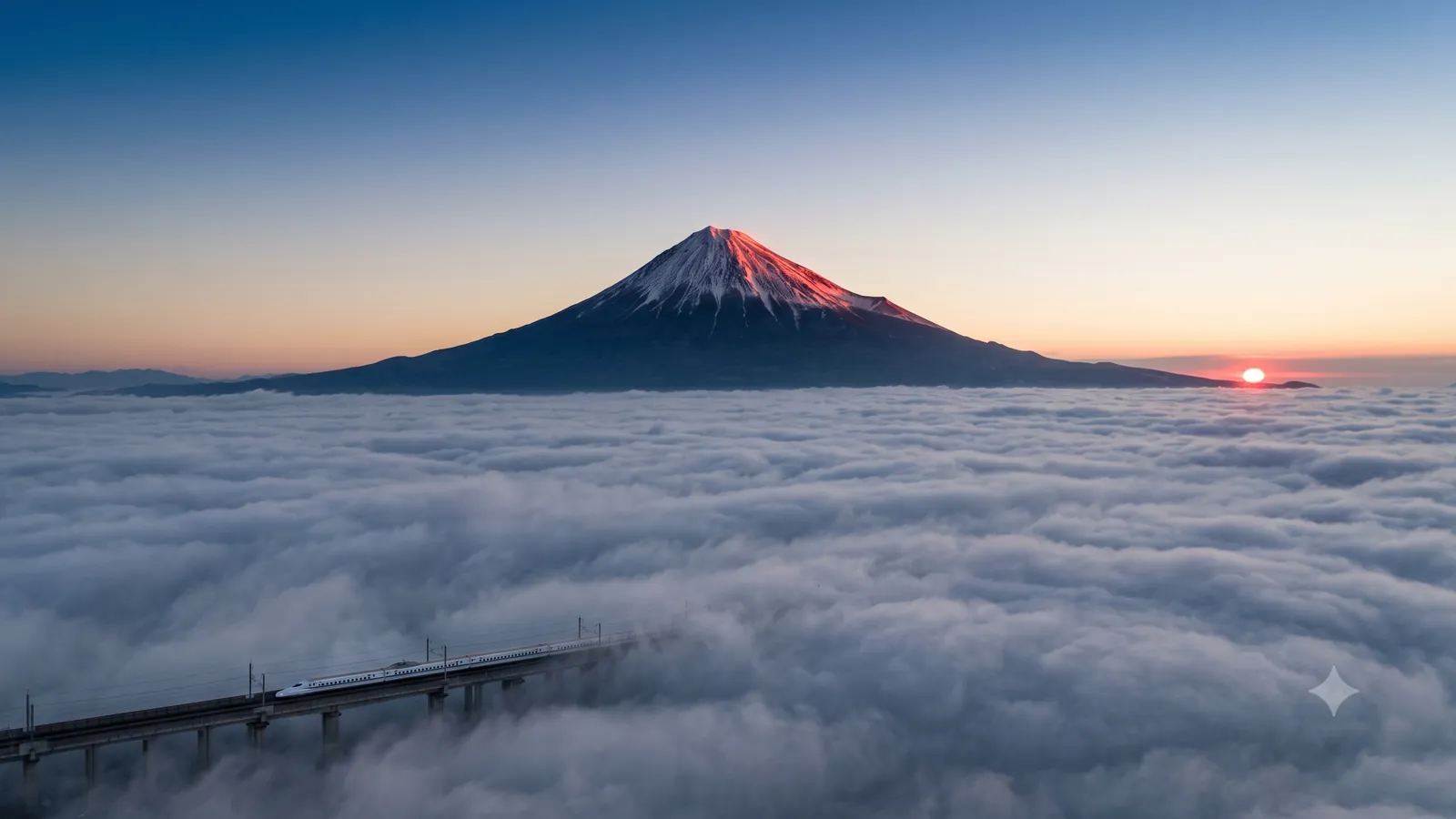
More about Mt. Fuji and the view from the window.
Enter your train number and see when Mt. Fuji appears→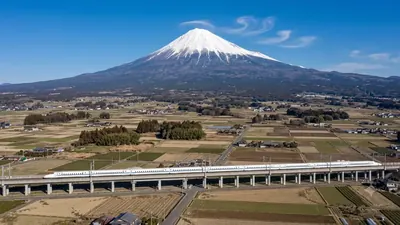 Why Mt. Fuji Is So Easy to See from the Shinkansen Why does Mt. Fuji dominate the view from the Tokaido Shinkansen? Using figures from official sources, this article explains how a free-standing 3,776 m peak and a rail line running along its southern foot combine — and which side of the train to sit on.
-
Seat E or Seat A? Which Side of the Shinkansen Faces Mt. Fuji Heading away from Tokyo, Mt. Fuji appears on the right; heading toward Tokyo, on the left. The window seat, however, is seat E in both directions (seat D in Green Cars) — a point JR Central itself states. This article settles the seat question, explains why the letter never flips on the return trip, and covers the one famous exception, Hidari-Fuji.
-
Tokyo to Kyoto or Osaka: Mt. Fuji from the Shinkansen On the westbound Tokaido Shinkansen — Tokyo to Nagoya, Kyoto, Osaka or beyond — Mt. Fuji appears on the right side of the train, roughly 43 to 49 minutes after leaving Tokyo (this site's estimate). Book seat E in ordinary cars or seat D in Green Cars, and be looking out the window before Shin-Fuji. This article walks the ride in order: the first glimpses, the main event, the Hidari-Fuji exception, and how to get times for your exact train.
-
Kyoto or Osaka to Tokyo: Catching Mt. Fuji on the Way Back On the eastbound Tokaido Shinkansen — Kyoto, Osaka or Nagoya toward Tokyo — Mt. Fuji appears on the left side of the train, and the seat letter is the same as on the way out: E in ordinary cars, D in Green Cars. The timing is the part people get wrong: the view comes well after Nagoya, not near Osaka. This article gives per-train-type figures calculated from the current timetable, and the one habit that stops you from sleeping through it.
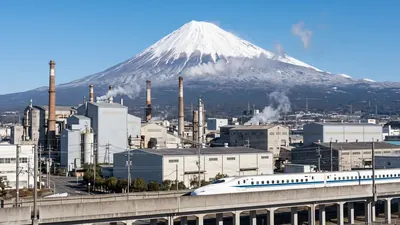 Where Mt. Fuji Looks Biggest from the Shinkansen The Tokaido Shinkansen passes closest to Mt. Fuji around Shin-Fuji Station in Fuji City, Shizuoka, until it crosses the Fuji River. This article sorts out what the view is like there — the factories in the foreground, the open river crossing, why sound barriers and terrain interrupt the view, and roughly how long the mountain stays visible (an estimate) — checked against official sources.
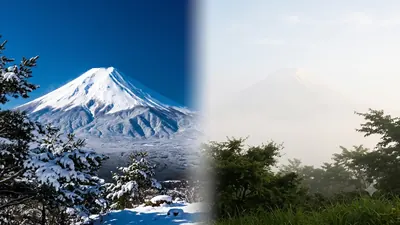 How Often Mt. Fuji Is Actually Visible — Winter vs. Summer, Morning vs. Noon Based on 35 years of fixed-point observations by Fuji City, this article shows how often Mt. Fuji is visible, month by month and by time of day. At 8 a.m. the full mountain shows 36.6% of the time — 61.7% in December but only 9.9% in July. It also explains why summer hides the mountain, and how to take it when it doesn't show.
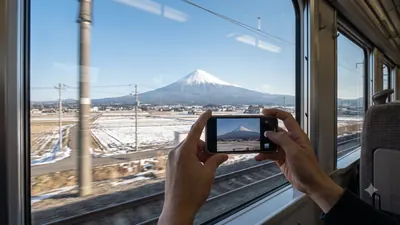 How to Photograph Mt. Fuji from the Shinkansen Window Practical technique for shooting Mt. Fuji from a Tokaido Shinkansen running at 285 km/h. Why the distant mountain doesn't blur, how to cut window reflections, what to adjust on a smartphone, how to prepare for the short viewing window — and the etiquette that goes with it.
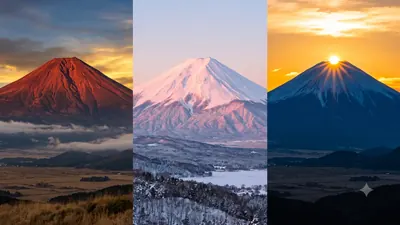 Akafuji, Beni-Fuji and Diamond Fuji — What's the Difference? Akafuji, when the bare mountainside glows red on summer mornings; Beni-Fuji, when the snow-covered mountain blushes at dawn or dusk; and Diamond Fuji, when the sun aligns with the summit. This article sorts the three out using dictionary and official definitions plus ephemeris data from the National Astronomical Observatory of Japan — and says honestly which of them you can hope to catch from the Tokaido Shinkansen window.
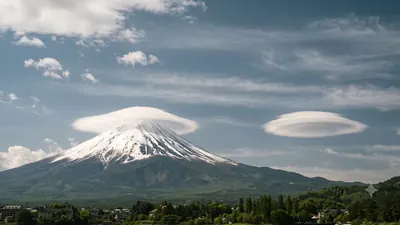 What Cap Clouds and Lenticular Clouds Tell You About Mt. Fuji's Weather The cap cloud (kasagumo) that sits on Mt. Fuji and the lenticular "hanging cloud" (tsurushigumo) floating downwind. How each forms, how to tell them apart, and how often the old saying "a capped Fuji means rain" actually comes true — checked against sources from MLIT, the JMA and the University of Tsukuba.
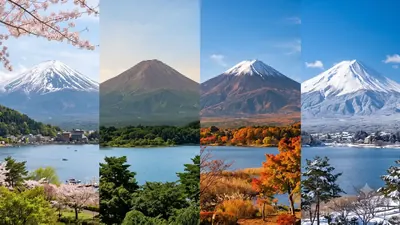 Mt. Fuji's First Snowcap, and How the Snow Changes with the Seasons Mt. Fuji's first snowcap is declared by the Kofu Local Meteorological Office based on what can be seen from Kofu. This article lays out the definition, the average date (October 2), the announcement dates of the past ten years, the fact that summit snow peaks at 206 cm in April, and the summer season when the snow disappears — all from published JMA figures.
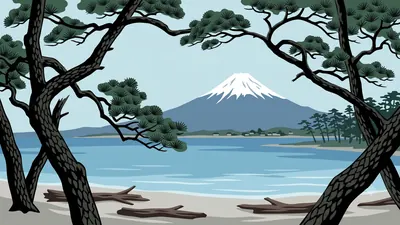 Why Mt. Fuji Is a World Cultural Heritage Site — Not a Natural One Mt. Fuji was inscribed on the World Heritage List in 2013 as a cultural site, not a natural one. This article checks the official name and what it means, how the mountain fell off the natural-heritage shortlist ten years earlier, the 25 component sites, Fuji-ko worship and ukiyo-e — and the last-minute reversal that kept Miho no Matsubara in the inscription.
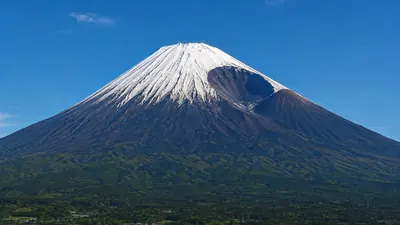 Mt. Fuji the Active Volcano, and the Hoei Eruption of 1707 Mt. Fuji is an active volcano monitored around the clock by the Japan Meteorological Agency. What happened in its last eruption — the Hoei eruption of 1707 — where the Hoei Crater on the southeast slope can be seen from, and how the current hazard map and evacuation plan stand, checked against official sources.
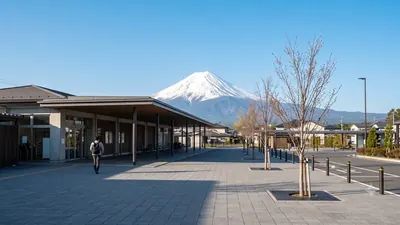 Getting Off the Shinkansen to See Mt. Fuji A guide for getting off the Shinkansen at Shin-Fuji, Mishima or Shizuoka and getting close to Mt. Fuji. Which train types stop where, the station where the mountain greets you at the exit, World Heritage component sites such as Miho no Matsubara and Fujisan Hongu Sengen Taisha, and how to reach Lake Tanuki and Shiraito Falls — checked against official sources.
All illustrations on this page are AI-generated images, not photographs of the actual scenery.